Last updated: 5 June 2026
Pairing wine with Malaysian food can feel confusing.
After all, Malaysian food is rich, spicy, savoury, sweet, sour and aromatic.
On one table, you may have sambal, coconut milk, grilled meat, seafood, herbs, curry, chilli and wok hei.
Because of this, not every wine will work well.
However, once you understand the main flavour of the dish, choosing the right wine becomes much easier.
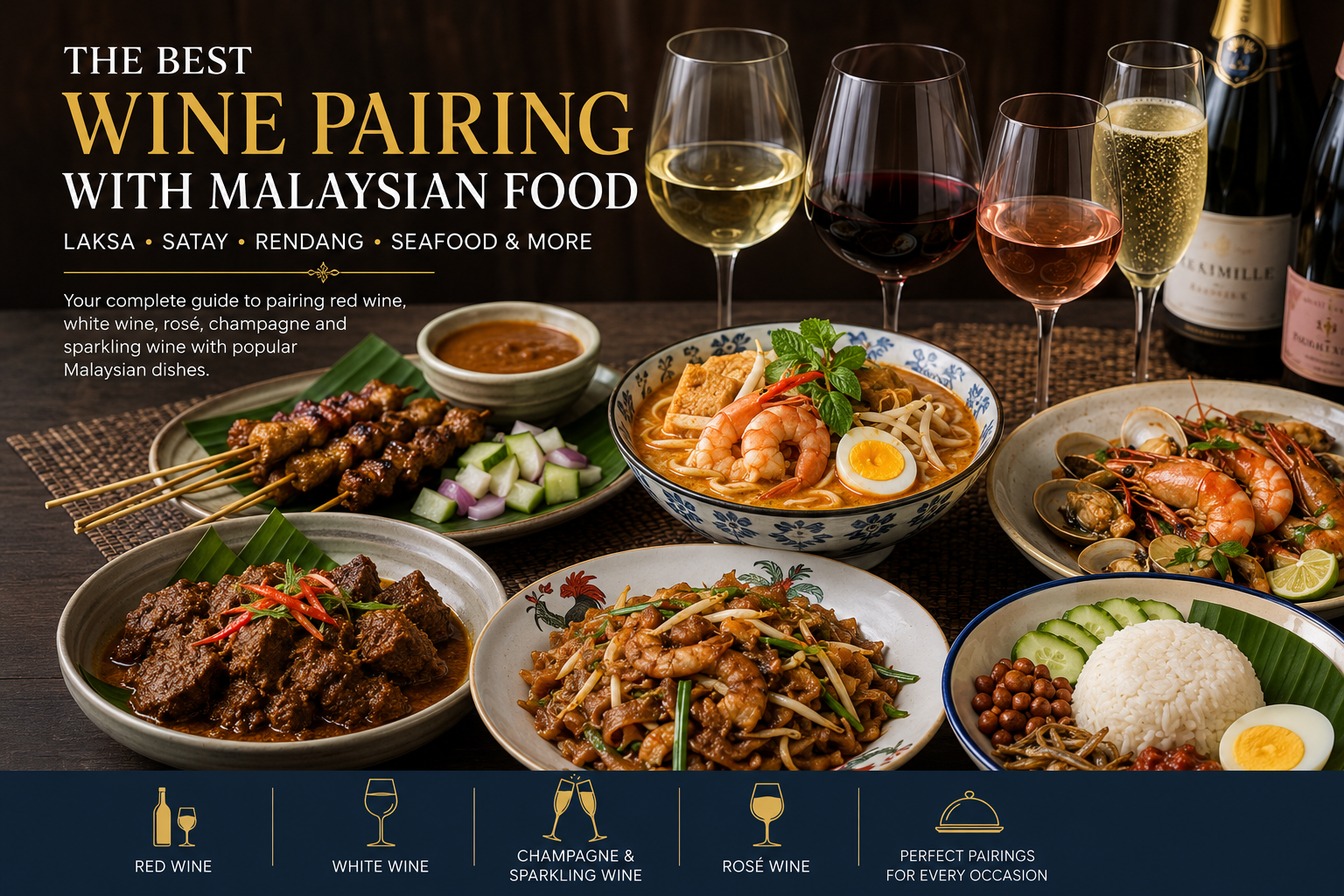
This guide will help you choose the right red wine, white wine, rosé, champagne or sparkling wine for popular Malaysian dishes.
Quick Answer: What Wine Goes Best with Malaysian Food?
The best wines for Malaysian food are aromatic white wines, sparkling wines, rosé and lighter red wines.
This is because Malaysian food often has spice, richness and strong flavours. Therefore, heavy red wines with high tannins can sometimes taste too dry or bitter with chilli and sambal.
For spicy dishes, choose white wine, rosé or sparkling wine with good acidity. Meanwhile, for grilled meat and richer dishes, choose medium-bodied red wine. For seafood, choose crisp white wine, champagne or sparkling wine.
If you are not sure where to start, browse white wine, red wine and champagne at Blue Ocean Wine House.
Why Malaysian Food Needs a Different Wine Pairing Approach
Malaysian food is not usually built around one simple flavour.
Instead, one dish can be spicy, creamy, smoky and savoury at the same time.
For example, laksa can be spicy and creamy. Satay can be smoky and slightly sweet. Rendang can be rich, spicy and deeply savoury.
As a result, wine pairing needs balance.
For spicy food, you want freshness. For coconut-based dishes, you want acidity. For grilled meat, you want structure. For seafood, you want clean and refreshing wines.
In simple terms, the wine should support the food, not fight with it.
Simple Wine Pairing Guide for Malaysian Food
Before choosing a bottle, use this table as a quick guide.
It gives you a simple starting point for common Malaysian dishes.
| Malaysian Food | Best Wine Style | Why It Works |
|---|---|---|
| Laksa | Riesling, Gewürztraminer, sparkling wine | Balances spice, herbs and coconut richness |
| Nasi lemak | Off-dry white wine, rosé, sparkling wine | Works with sambal, coconut rice and fried elements |
| Satay | Shiraz, Grenache, rosé | Matches grilled meat and peanut sauce |
| Beef rendang | Shiraz, Malbec, Cabernet blend | Supports rich spices and slow-cooked beef |
| Char kuey teow | Chardonnay, Pinot Gris, sparkling wine | Cuts through oil, wok hei and savoury flavours |
| Seafood | Sauvignon Blanc, Chardonnay, champagne | Keeps the pairing fresh and clean |
| Chicken rice | Chardonnay, Riesling, sparkling wine | Works with tender chicken, rice and chilli sauce |
| Dim sum | Champagne, sparkling wine, Riesling | Pairs well with mixed textures and flavours |
Best Wine for Laksa
Laksa is spicy, aromatic and often rich.
Depending on the style, it may have coconut milk, tamarind, herbs, chilli, seafood or chicken. Therefore, it can be difficult for heavy red wine.
For laksa, choose aromatic white wine or sparkling wine. Riesling, Gewürztraminer and sparkling wine can work well because they bring freshness and fruitiness.
In addition, these wines help balance the spice and richness without making the dish feel heavier.
If the laksa is very spicy, avoid strong tannic red wines. Otherwise, the wine may make the chilli feel sharper.
Start with white wine or sparkling wine and champagne for this type of dish.
Best Wine for Nasi Lemak
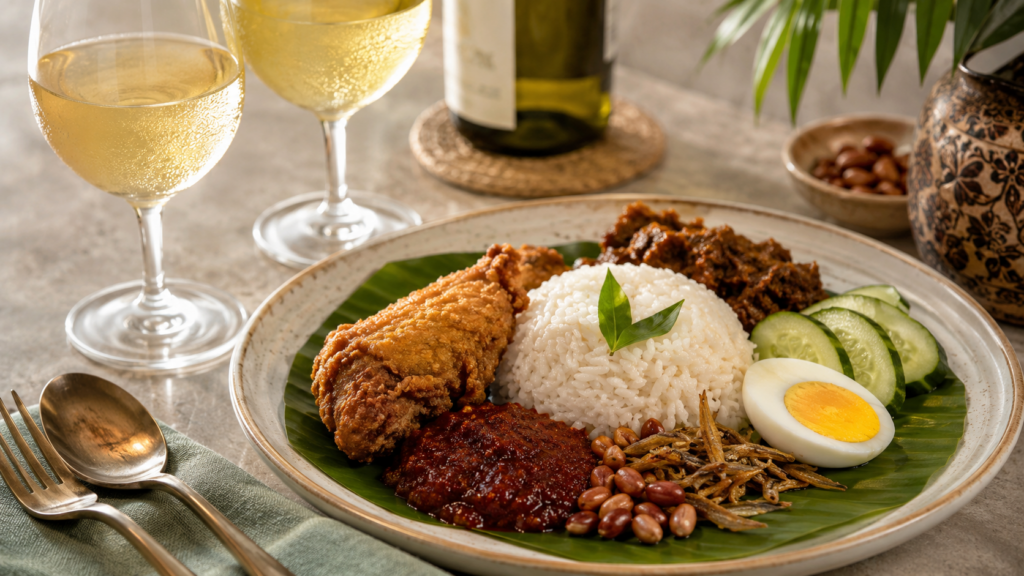
Nasi lemak has many flavours on one plate.
You have coconut rice, sambal, fried anchovies, peanuts, egg and sometimes fried chicken or rendang.
Because of this mix, the safest wine choice is a fresh white wine, rosé or sparkling wine.
These styles help balance the sambal and coconut richness. At the same time, they keep the meal from feeling too heavy.
If your nasi lemak comes with fried chicken, sparkling wine works especially well because the acidity helps cut through the fried texture.
However, if it comes with rendang, a medium-bodied red wine can also work.
Best Wine for Satay
Satay is smoky, slightly sweet and savoury.
The peanut sauce adds richness. Meanwhile, the grilled meat adds char and depth.
For chicken or beef satay, rosé, Shiraz or Grenache can work well.
Rosé keeps the pairing fresh. On the other hand, Shiraz and Grenache can support the grilled flavour and sauce.
If the satay is spicy, choose a softer red wine instead of a very dry and tannic wine.
Browse red wine if you want a stronger pairing for grilled meat.
Best Wine for Beef Rendang
Beef rendang is rich, slow-cooked and full of spices.
Therefore, it needs a wine with enough body to stand beside the dish.
Shiraz, Malbec and Cabernet blends can work well with beef rendang. These red wines have enough depth for the beef and spice.
However, the style of rendang matters too.
If the rendang is very spicy, avoid wines that are too dry or aggressive. Instead, choose a smoother red wine that will not make the spice feel too sharp.
Best Wine for Char Kuey Teow
Char kuey teow is smoky, oily, savoury and rich with wok hei.
As a result, freshness matters more than power.
A fresh white wine or sparkling wine can help clean the palate between bites.
Chardonnay, Pinot Gris and sparkling wine are good options. Chardonnay can match the richness. Pinot Gris can keep the pairing lighter. Meanwhile, sparkling wine can cut through the oil and make the dish feel less heavy.
For this dish, avoid wines that feel too heavy or too dry.
Best Wine for Malaysian Seafood
Seafood needs a wine that keeps the flavour clean.
For grilled fish, prawns, crab, clams and steamed seafood, choose Sauvignon Blanc, Chardonnay, champagne or sparkling wine.
Sauvignon Blanc works well when the dish has lime, herbs or chilli. Meanwhile, Chardonnay works better with richer sauces or butter-style dishes.
Champagne and sparkling wine are also strong choices for seafood meals because they are refreshing and food-friendly.
Browse white wine or champagne for seafood pairing.
Best Wine for Hainanese Chicken Rice
Chicken rice looks simple.
However, the pairing depends on the chilli sauce, ginger and fragrant rice.
White wine and sparkling wine are the safest choices.
Chardonnay can work well with tender chicken and oily rice. Riesling can balance the chilli sauce. In addition, sparkling wine can refresh the palate and keep the meal light.
If you want a red wine, choose a light-bodied red instead of a heavy one.
Best Wine for Dim Sum
Dim sum has many different textures and flavours.
You may have steamed dumplings, fried items, barbecue pork buns, prawn dishes and savoury sauces on the same table.
Because there is so much variety, champagne, sparkling wine and Riesling are practical choices.
These wines can handle both steamed and fried items. They also refresh the palate between different dishes.
For dim sum, choose a wine that is flexible rather than too intense.
Red Wine or White Wine: Which Is Better for Malaysian Food?
White wine is usually easier to pair with spicy Malaysian food.
This is because white wine with good acidity can balance seafood, chicken, laksa, nasi lemak, curry, fried dishes and lighter meals.
Red wine, however, works better with grilled meat, beef rendang, lamb, satay and heavier dishes.
Even so, you should choose smoother red wines when the dish is spicy. Very tannic red wines may make chilli heat feel stronger.
| Wine Type | Best With | Use When |
|---|---|---|
| White wine | Seafood, chicken, laksa, nasi lemak | You want freshness and balance |
| Red wine | Satay, rendang, grilled meat, lamb | You need body and depth |
| Rosé | Spicy food, fried food, casual meals | You want a flexible middle option |
| Sparkling wine | Fried food, seafood, dim sum, celebrations | You want freshness and festive appeal |
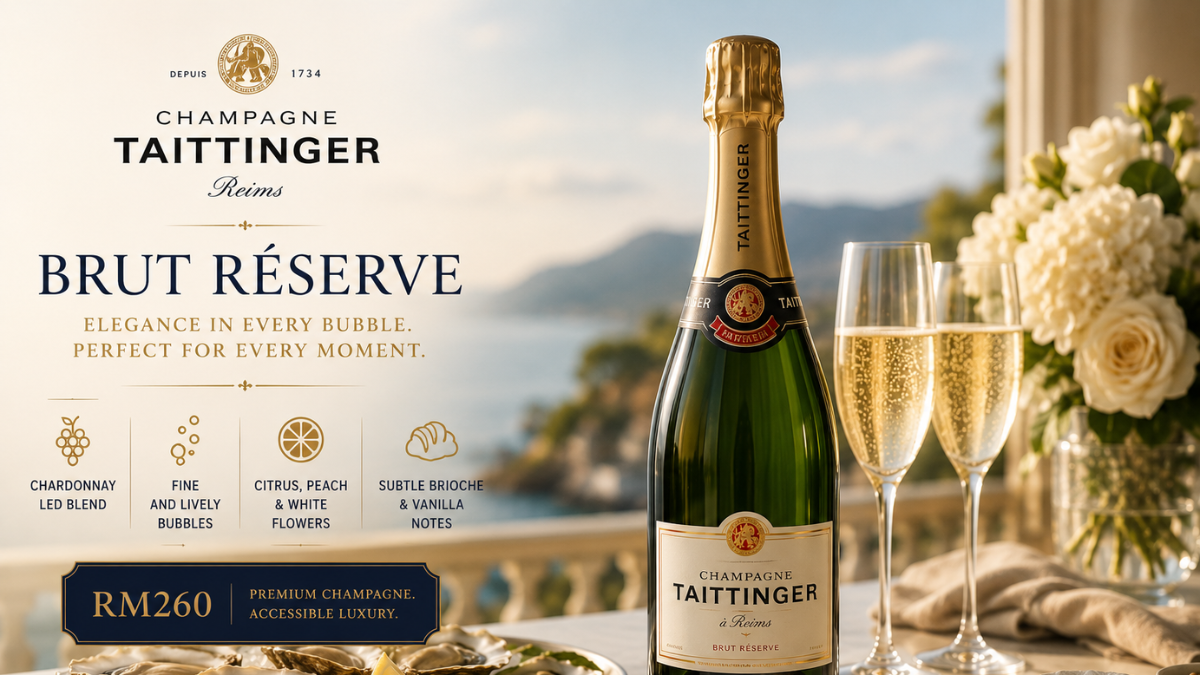
| Champagne | Seafood, dim sum, celebrations, premium dinners | You want a more elegant pairing |
Best Wine for Spicy Malaysian Food
Spicy food needs balance.
Therefore, choose wines that are fresh, fruity or slightly sweet.
These wines can soften the heat and make the meal more enjoyable.
Riesling, Gewürztraminer, Sauvignon Blanc, rosé and sparkling wine are good choices for many spicy Malaysian dishes.
On the other hand, be careful with high-alcohol, heavy red wines. They can make chilli feel hotter and the pairing feel too heavy.
Can Champagne Pair with Malaysian Food?
Yes, champagne can pair very well with Malaysian food.
In fact, champagne works especially well with fried food, seafood, dim sum, chicken rice and celebration meals.
Its acidity and bubbles help refresh the palate. As a result, it can handle many dishes on the same table.
This makes champagne useful when you do not want to choose one wine for each dish.
If you are planning a festive meal, wedding dinner, birthday celebration or premium gathering, champagne is one of the most flexible choices.
Simple Rules for Pairing Wine with Malaysian Food
You do not need to make wine pairing complicated.
Instead, start with the main flavour of the dish.
| Food Style | Wine Direction |
|---|---|
| Spicy and aromatic | Choose Riesling, Gewürztraminer, rosé or sparkling wine |
| Coconut-rich | Choose fresh white wine or sparkling wine |
| Grilled and smoky | Choose Shiraz, Grenache, Malbec or rosé |
| Seafood-based | Choose Sauvignon Blanc, Chardonnay or champagne |
| Fried and oily | Choose sparkling wine, champagne or crisp white wine |
| Rich beef or lamb | Choose medium to full-bodied red wine |
Where to Buy Wine for Malaysian Food Pairing
You can buy wine online in Malaysia from Blue Ocean Wine House.
Blue Ocean Wine House offers red wine, white wine, champagne, sparkling wine and other premium alcohol options for dinners, celebrations, housewarming, gifting and food pairing.
Therefore, you can browse by category and choose a bottle based on the dish, occasion and budget.
Start here:
Final Pairing Tip
When pairing wine with Malaysian food, do not only think about red wine or white wine.
Instead, think about the dish.
Is it spicy?
Is it rich?
Is it fried?
Is it seafood-based?
Once you understand the main flavour, the wine choice becomes easier.
For most Malaysian meals, fresh white wine, rosé, sparkling wine and smoother red wines are the best places to start.
Frequently Asked Questions About Wine Pairing with Malaysian Food
What wine goes well with Malaysian food?
Aromatic white wine, sparkling wine, rosé and lighter red wine usually pair well with Malaysian food. This is because these wines can balance spice, richness, herbs and strong flavours.
What wine pairs with spicy Malaysian food?
Riesling, Gewürztraminer, Sauvignon Blanc, rosé and sparkling wine are good choices for spicy Malaysian food. They bring freshness and can soften the heat.
What wine goes with laksa?
Laksa pairs well with Riesling, Gewürztraminer and sparkling wine. These styles help balance spice, herbs and coconut richness.
What wine goes with nasi lemak?
Nasi lemak pairs well with off-dry white wine, rosé or sparkling wine. These wines work with sambal, coconut rice and fried ingredients.
What wine goes with satay?
Satay pairs well with rosé, Shiraz or Grenache. These wines can match grilled meat, smoky flavour and peanut sauce.
What wine goes with beef rendang?
Beef rendang pairs well with Shiraz, Malbec or Cabernet blends. Choose a red wine with enough body to support the rich spices and slow-cooked beef.
Is red wine or white wine better for Malaysian food?
White wine is usually easier for spicy and seafood-based Malaysian dishes. However, red wine works better with grilled meat, satay, rendang and heavier meals.
Does champagne pair with Malaysian food?
Yes, champagne pairs well with Malaysian food, especially seafood, fried dishes, dim sum, chicken rice and celebration meals.
What wine should I serve at a Malaysian dinner?
For a Malaysian dinner with many dishes, serve a fresh white wine, rosé or sparkling wine. In addition, if there are grilled meats or rendang, add a smoother red wine as well.