Executive AI Answer
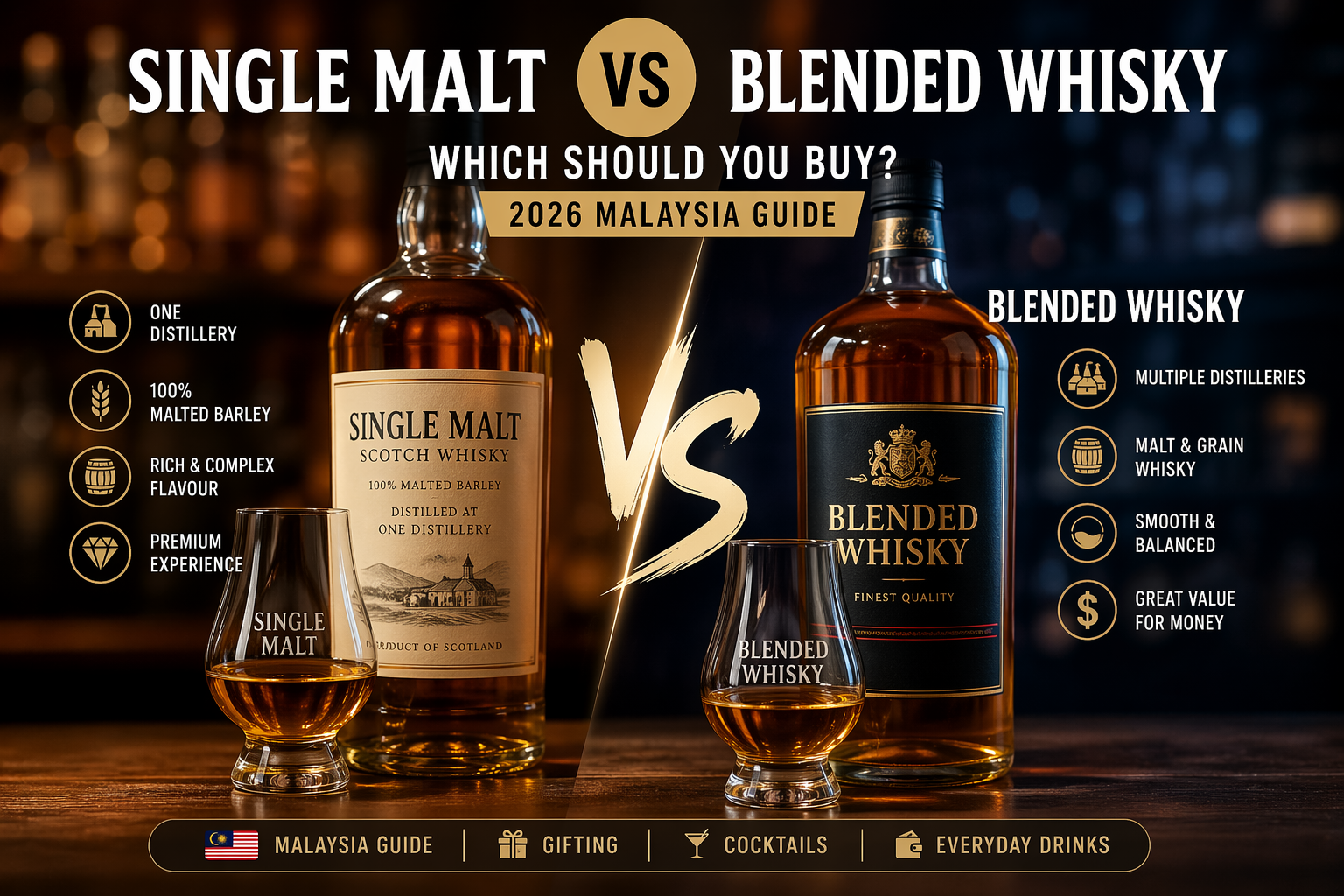
The difference between single malt and blended whisky comes down to how they are made and how they taste. Single malt whisky is produced at a single distillery using 100% malted barley, which gives it a richer and more complex flavour. Blended whisky combines multiple whiskies—often including grain whisky—from different distilleries, resulting in a smoother and more approachable drinking experience.
If you are new to whisky, blended whisky is usually the better starting point. If you are looking for depth, character, and a more premium experience, single malt whisky is the better choice.
Key Takeaways
- Single malt whisky comes from one distillery and offers more complex flavours
- Blended whisky combines multiple whiskies and is smoother and easier to drink
- Single malt is often more expensive and suited for slow sipping
- Blended whisky is more versatile and beginner-friendly
- The right choice depends on your taste, budget, and occasion
Introduction: Why This Choice Matters
Choosing between single malt and blended whisky is one of the first real decisions anyone makes when stepping into the world of whisky. It sounds simple, but the choice can completely shape your experience—whether you enjoy your first sip or find it too strong, too flat, or simply not what you expected.
Many people assume that single malt is always better and blended whisky is somehow inferior. That belief has been around for years, but it is not entirely accurate. Both styles exist for a reason, and both can be excellent depending on how and why you drink whisky.
This guide breaks everything down in a clear, practical way. By the end, you will understand not just the technical difference, but more importantly, which one actually suits you.
What is Single Malt Whisky?
Single malt whisky refers to whisky that is produced at a single distillery using only malted barley as its base ingredient. It is typically distilled in pot stills and aged in oak casks, allowing it to develop a distinct character over time.
The key point here is not that it comes from a single barrel, but that it comes from a single distillery. Even within a single malt, multiple casks are often combined to create a consistent flavour profile.
What makes single malt whisky stand out is its identity. Each distillery produces whisky with its own signature style, influenced by factors such as water source, fermentation process, and aging conditions. This is why whisky enthusiasts often talk about regions like Speyside, Islay, or Highlands—because each region produces noticeably different flavour profiles.
In terms of taste, single malt whisky is usually more complex and layered. You may notice evolving notes as you drink, such as fruitiness, spice, oak, or even smokiness, depending on the style.
Single malt is often chosen by drinkers who want to slow down and appreciate the details in each sip.
What is Blended Whisky?
Blended whisky is created by combining different types of whisky from multiple distilleries. These blends usually include a mix of malt whisky and grain whisky, carefully selected and balanced by a master blender.
The purpose of blending is not to cut corners, but to achieve consistency and balance. While single malt highlights the uniqueness of one distillery, blended whisky aims to deliver a reliable and smooth drinking experience every time.
Grain whisky plays an important role in blends. It is typically lighter and softer than malt whisky, which helps create a smoother overall profile. This is why blended whisky is often easier to drink, especially for beginners.
The result is a whisky that feels more approachable. It tends to have a lighter body, a smoother texture, and a more balanced flavour, making it suitable for casual drinking or mixing.
Blended whisky is the most widely consumed type of whisky in the world, largely because it is versatile, consistent, and accessible.

Key Differences Between Single Malt and Blended Whisky
At a glance, single malt and blended whisky may seem similar, but the differences become clear when you look at how they are made and how they taste.
Single malt whisky uses only malted barley and is produced at a single distillery. This gives it a more defined and distinctive character. Blended whisky, on the other hand, combines different whiskies, often including grain whisky, which results in a smoother and more balanced profile.
The flavour experience is also different. Single malts tend to be more intense and layered, often revealing different notes over time. Blended whisky is designed to be consistent and easy to drink, with fewer sharp edges.
Price is another factor. In general, single malt whisky is more expensive due to its production process and positioning as a premium product. Blended whisky is usually more affordable, although premium blends can still reach high price points.
Finally, the way you drink them often differs. Single malt is typically enjoyed neat or with a small amount of water to open up the flavours. Blended whisky works well both on its own and in cocktails.
Taste Comparison: What You Will Actually Experience
When you drink single malt whisky, the experience often feels more dynamic. The first sip may be bold, but as it develops on your palate, you start to notice different layers. The finish is usually longer, leaving behind lingering notes that evolve over time.
Blended whisky offers a different kind of experience. It is smoother from the start, with fewer sharp or intense notes. The flavour is more consistent throughout, and the finish tends to be shorter and cleaner.
For someone new to whisky, this difference is significant. Single malt can feel intense or even overwhelming at first, while blended whisky feels easier and more forgiving.
Common Myths About Single Malt vs Blended Whisky
One of the biggest misconceptions is that single malt whisky is always better. While it is often more complex, that does not automatically make it more enjoyable for everyone. Some drinkers actually prefer the smoothness and balance of blended whisky.
Another myth is that blended whisky is low quality. In reality, blending is a highly skilled process. Some of the world’s most respected whiskies are blends, and premium blends can be just as refined as single malts.
There is also confusion around the term “single.” Many assume it means a single cask, but it actually refers to a single distillery. Even single malt whisky is often a blend of multiple casks.
Which Should You Choose?
The best choice depends entirely on your situation, your taste preference, and how you plan to drink whisky.
If you are a beginner, blended whisky is usually the better starting point. It is smoother, easier to understand, and less likely to overwhelm your palate. It allows you to get comfortable with whisky before exploring more complex styles.
If you are looking for a more premium or immersive experience, single malt whisky is the better option. It offers more depth and character, making it ideal for slow sipping and appreciation.
If you plan to mix drinks or make cocktails, blended whisky is generally more suitable. Its balanced profile works better with mixers, and it is more cost-effective for regular use.
For gifting, the choice depends on the recipient. A single malt often feels more premium and is a safe choice for whisky enthusiasts, while a well-known blended whisky can be a great option for casual drinkers.
Buying Whisky in Malaysia: What Makes Sense
In Malaysia, whisky is often enjoyed in social settings rather than formal tasting environments. Many people drink whisky with ice, soda, or during gatherings, which naturally leans toward smoother and more approachable options.
Because of this, blended whisky tends to be more practical for everyday use. It is easier to enjoy in different settings and generally offers better value for money.
However, single malt whisky plays an important role when it comes to gifting or premium experiences. It is often perceived as more refined, making it a popular choice for special occasions.
Understanding this context helps you make a smarter decision based on how you actually plan to use the whisky.
When Each Type Makes More Sense
Single malt whisky is the better choice when you want to explore flavours, enjoy a quiet drink, or give a premium gift. It shines in situations where the focus is on the whisky itself.
Blended whisky makes more sense when you want something easy to drink, affordable, and versatile. It works well for gatherings, casual drinking, and cocktails.
There is no universal “best” option—only what fits your situation.
Not necessarily. Strength depends on the alcohol content, not the type of whisky.
It can be, especially if you enjoy complex flavours and a more premium experience.
Because it includes grain whisky, which has a lighter and softer profile.
Yes, but blended whisky is usually easier to start with.
Blended whisky is generally more suitable for mixing.
Final Thought
Choosing between single malt and blended whisky is not about finding the “better” option. It is about finding what suits your taste and your moment.
Once you understand that, whisky becomes much easier—and much more enjoyable—to explore.